Wall Mount vs Freestanding Ballet Barre: Which Is Right for Your Space?
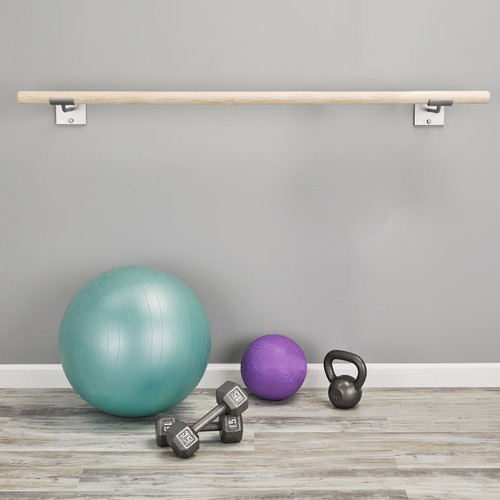
Choosing between a wall-mounted and freestanding ballet barre is one of the first decisions every dancer faces when setting up a home or professional studio. Both have real advantages — the right choice depends on your space, your goals, and how you use your barre day to day.
Wall-Mounted Barres
A wall-mounted barre is permanently attached to your wall studs, creating a rock-solid support that moves exactly as much as the building — which is to say, not at all. Professional dance studios overwhelmingly choose wall mounts for this reason.
Why dancers love them
- Unmatched stability — no wobble, no slide, full confidence during grand battements and fouettés
- Space efficiency — takes up zero floor space
- Professional feel — the standard in every serious studio worldwide
- Custom length — we can make any custom size for wall or floor mounted barres
Considerations
- Requires installation into wall studs (we include a complete bracket and hardware kit)
- Not ideal for renters without landlord permission
Freestanding Barres
Freestanding barres stand on their own feet and require no installation. They're popular with renters, dancers who move frequently, and studios that reconfigure their space often.
Why dancers choose them
- No installation required — set up in minutes, anywhere
- Portable — ideal for traveling teachers or shared spaces
The honest trade-off
Some flex during vigorous exercises. For pure classical training, this matters. For fitness-based barre work, it's usually fine.
Our recommendation
- Own your home or studio? Install a wall-mounted barre. You'll never regret it.
- Renting? A freestanding barre gets you training today without risking your deposit.
- Teaching traveling classes? Portable is the obvious answer.
At Custom Barres, we build both — all from solid American hardwood, to your exact specifications. If you're not sure which is right for your space, our quote concierge can walk you through it in about 60 seconds.